
Staff Writer
Published February 11, 2026 · Updated September 2, 2026last updated dates
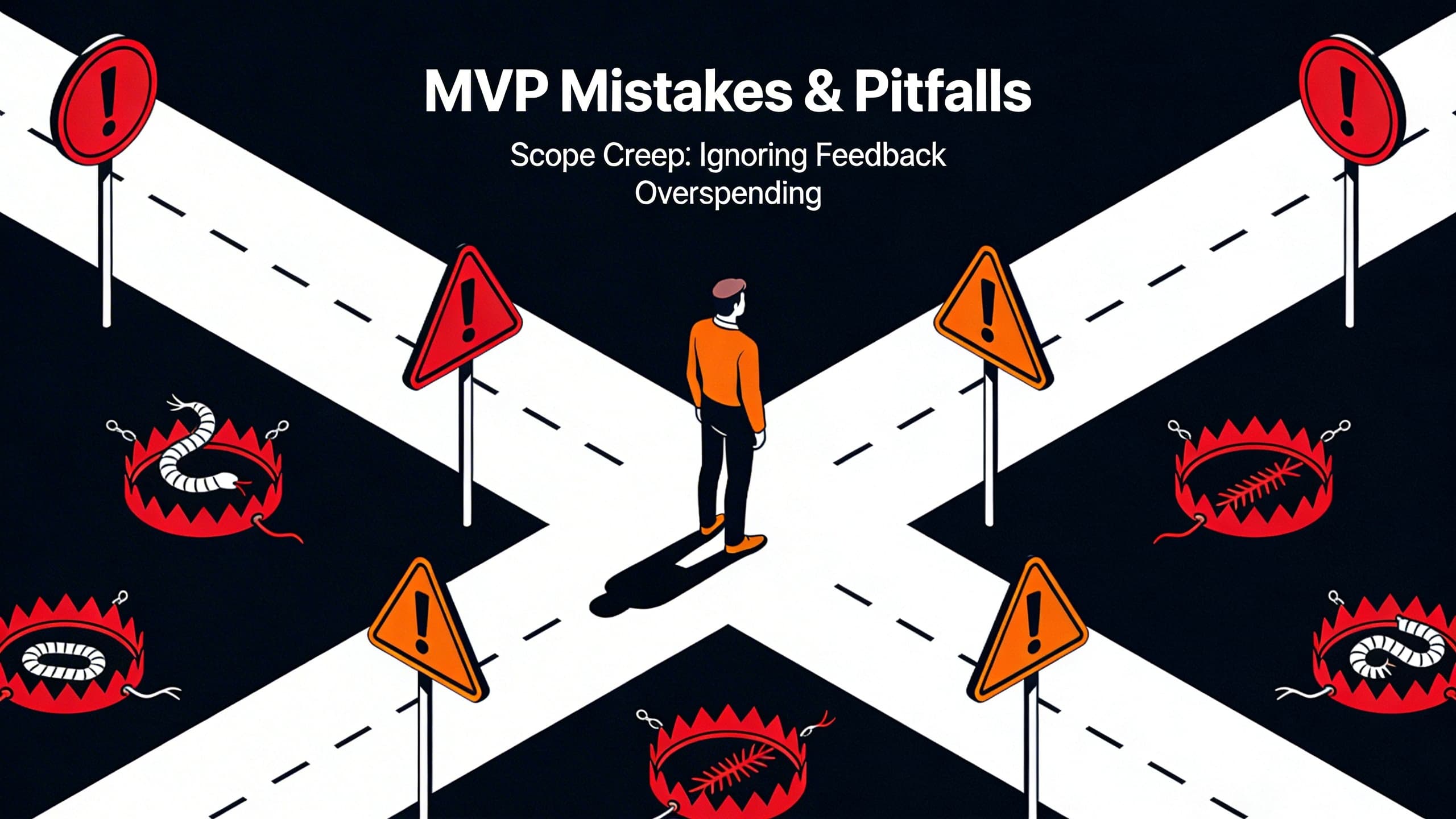
The MVP Trap: 7 Technical Mistakes That Kill Startups Before They Find Product-Market Fit
Launching a Minimum Viable Product (MVP) is a critical milestone for any startup. In my 15+ years as a fractional CTO helping over 50 startups launch MVPs, I've seen that technical decisions made during this phase can either accelerate your path to product-market fit or derail your entire venture. The harsh truth? Many startups die not because their idea was bad, but because they fell into avoidable technical traps that drain capital, slow down iterations, and frustrate early users.
In this article, I’ll walk you through 7 technical mistakes I see repeatedly with MVPs. Each one is a silent killer, often disguised as a smart or necessary choice. I’ll also provide practical advice and ballpark cost estimates on how these mistakes impact your runway and growth. Whether you’re a founder, product lead, or developer, this guide will help you build smarter MVPs that maximize learning and minimize wasted effort.
1. Over-Engineering for Scale You Don’t Have
One of the most common mistakes I see is startups spending time and money building infrastructure that supports millions of users — before they have one hundred. This is the classic “premature optimization” trap.
Why it happens: Founders or engineers worry about scalability, availability, and performance from day one, fearing future failure modes.
What it costs you:
- Time: Weeks or months spent building complex microservices, asynchronous pipelines, or distributed architectures.
- Money: Hiring senior engineers for infrastructure, or paying for expensive cloud resources.
- Complexity: Harder to onboard new team members, slower feature development, increased bugs.
In my experience, this mistake can add 3-6 months of delay and $50k–$150k in unnecessary engineering costs during MVP development.
Practical advice: Focus on simplicity and speed. Use a monolithic architecture or serverless functions if possible. Start with managed cloud services like Firebase, Heroku, or AWS Amplify that handle scale automatically. Optimize for the current load — it’s easier to scale up later than to scale down.
2. Choosing Trendy Tech Over Proven Tech
The allure of using the latest frameworks or languages can be strong. I’ve seen startups pick bleeding-edge tech stacks like Rust-based backends or experimental frontend frameworks because they want to “future-proof” or impress investors.
But trendy tech often lacks documentation, community support, and experienced talent, which leads to:
- Longer development times due to learning curves and bug fixing.
- Difficulty hiring engineers who know the stack.
- Unpredictable maintenance costs.
In concrete numbers, this can translate to an extra 20-40% increase in engineering hours, or roughly $30k-$80k in added development costs for a typical MVP.
Best practice: Stick with battle-tested technologies with large communities and rich ecosystems. For example, Node.js or Python for backend APIs, React or Vue for frontend, and PostgreSQL or MySQL for databases. This approach lowers risk and speeds iteration.
3. Ignoring Basic Security From Day One
Security is often seen as a post-launch concern. However, neglecting even basic security controls in your MVP can lead to data leaks, compliance issues, and loss of user trust — all fatal for early-stage startups.
Common oversights include:
- No HTTPS enforced on MVP domains.
- Hardcoded secrets or API keys in code repositories.
- Missing authentication or authorization checks.
- Storing passwords without hashing.
The cost of fixing security issues after launch can be substantial:
- Emergency engineering work to patch vulnerabilities: $10k–$50k+
- Potential legal fines or penalties depending on data impacted.
- Lost user trust and churn, which is hard to quantify but critical.
Actionable steps: Implement HTTPS, use environment variables for secrets, adopt best practices like OAuth or JWT for auth, and store passwords using bcrypt or Argon2. Use security linters and scanners early on.
4. No Monitoring or Observability
Launching your MVP without any monitoring or logging is like flying blind. You won’t know if your app crashes, slows down, or behaves unexpectedly — and by the time users complain, damage is done.
In my experience, startups that skip this step spend significantly more time troubleshooting issues reactively, leading to:
- Extended downtimes affecting user experience.
- Lost productivity as engineers chase bugs without context.
- Increased customer support overhead.
Setting up basic monitoring and logging early costs roughly $100–$300/month using tools like Sentry, Datadog, or LogRocket, but saves hundreds of hours of firefighting later.
Recommendation: Instrument your MVP with error tracking, performance monitoring, and request logging from day one. This ensures you catch issues fast and iterate efficiently.
5. Poor Data Architecture That Blocks Analytics
Data-driven decision making is key to finding product-market fit. Yet many MVPs are built with ad hoc or inconsistent data models, making analytics difficult or impossible.
Typical pitfalls include:
- Scattered user data in multiple tables with inconsistent IDs.
- Lack of event tracking for key user actions.
- Ignoring schema design or data validation.
The consequences are serious:
- Inability to measure KPIs and user behavior accurately.
- Wasted marketing spend due to lack of attribution.
- Delayed product iterations while struggling to gather insights.
Fixing this post-launch can cost $20k–$60k in re-engineering and lost opportunity.
How to avoid it: Design your data model upfront with analytics in mind. Implement consistent user identifiers, track key events via tools like Segment or Mixpanel, and validate data on input. This foundation accelerates learning.
6. Building Custom When Off-The-Shelf Works
It’s tempting to build every feature in-house, especially when your idea feels unique. But custom development is costly and slow compared to leveraging existing SaaS products or APIs.
For example, building your own payment processing, email delivery, or user authentication can add weeks or months and tens of thousands of dollars.
Here’s a quick cost comparison based on my experience:
| Feature | Custom Build Cost | Off-The-Shelf |
|---|---|---|
| Payment Processing | $30k–$80k (3-6 months dev + compliance) | Stripe: $0 upfront, 2.9% + 30¢ per transaction |
| Email Delivery | $10k–$25k (dev + infrastructure) | SendGrid / Mailgun: pay-as-you-go plans |
| Authentication | $15k–$40k (dev + security) | Auth0, Firebase Auth: free tiers + easy integration |
Bottom line: Use SaaS and APIs to get to MVP faster and focus engineering on your core value proposition.
7. Feature Creep Before Validating Core Value Proposition
The biggest killer of MVP timelines is feature creep. Startups often add bells and whistles before validating their core product value, diluting focus and complicating the codebase.
In my experience, unnecessary features add at least 30-50% to initial development time and increase maintenance overhead exponentially.
The cost: For a typical MVP budget of $100k, feature creep can add $30k-$50k or more, pushing you past your runway and delaying validation.
How to avoid it:
- Define your core value hypothesis clearly. What problem are you solving?
- Prioritize features that directly test that hypothesis.
- Use frameworks like the MoSCoW method (Must, Should, Could, Won't) to control scope.
- Iterate rapidly based on user feedback.
Conclusion
Building an MVP is a balancing act between speed, quality, and learning. Avoiding these 7 technical mistakes will save you precious time, money, and frustration. Remember, the goal of an MVP is to validate your product-market fit hypothesis with minimal waste.
Here’s a quick recap of estimated costs wasted by each mistake if ignored:
- Over-engineering: $50k–$150k + months delay
- Trendy tech: $30k–$80k extra dev cost
- Ignoring security: $10k–$50k+ emergency fixes
- No monitoring: $100+/month + lost hours
- Poor data architecture: $20k–$60k rework
- Custom vs off-the-shelf: tens of thousands more
- Feature creep: 30–50% longer dev time
In my experience, startups that heed these lessons can reduce their MVP build time by months and preserve tens or hundreds of thousands of dollars — critical advantages when racing to product-market fit.
If you want help scoping your MVP, choosing the right tech stack, or setting up efficient engineering practices, reach out. With the right technical strategy, your startup can move fast, learn faster, and win.