
Staff Writer
Published February 11, 2026 · Updated September 30, 2026last updated dates
Introduction
Bringing a software idea to life is exhilarating but can be daunting, especially for non-technical founders. From my 30 years as a fractional CTO and having helped launch over 50 MVPs, I’ve seen that a clear, realistic roadmap is the difference between a successful product launch and endless delays. This article lays out a practical 8-week technical roadmap for building a basic SaaS MVP, including budgets, tech stacks, and what features to prioritize or cut.
Whether you’re bootstrapping or prepping for your first seed round, this guide will help you align expectations, communicate effectively with developers, and keep your MVP lean and focused.
Why an 8-Week Roadmap?
Based on my experience, 8 weeks is a sweet spot for building a functional MVP without burning excessive budget or losing market relevance. Less than 8 weeks often leads to rushed, buggy releases; more than 8 weeks can mean feature bloat and missed opportunities.
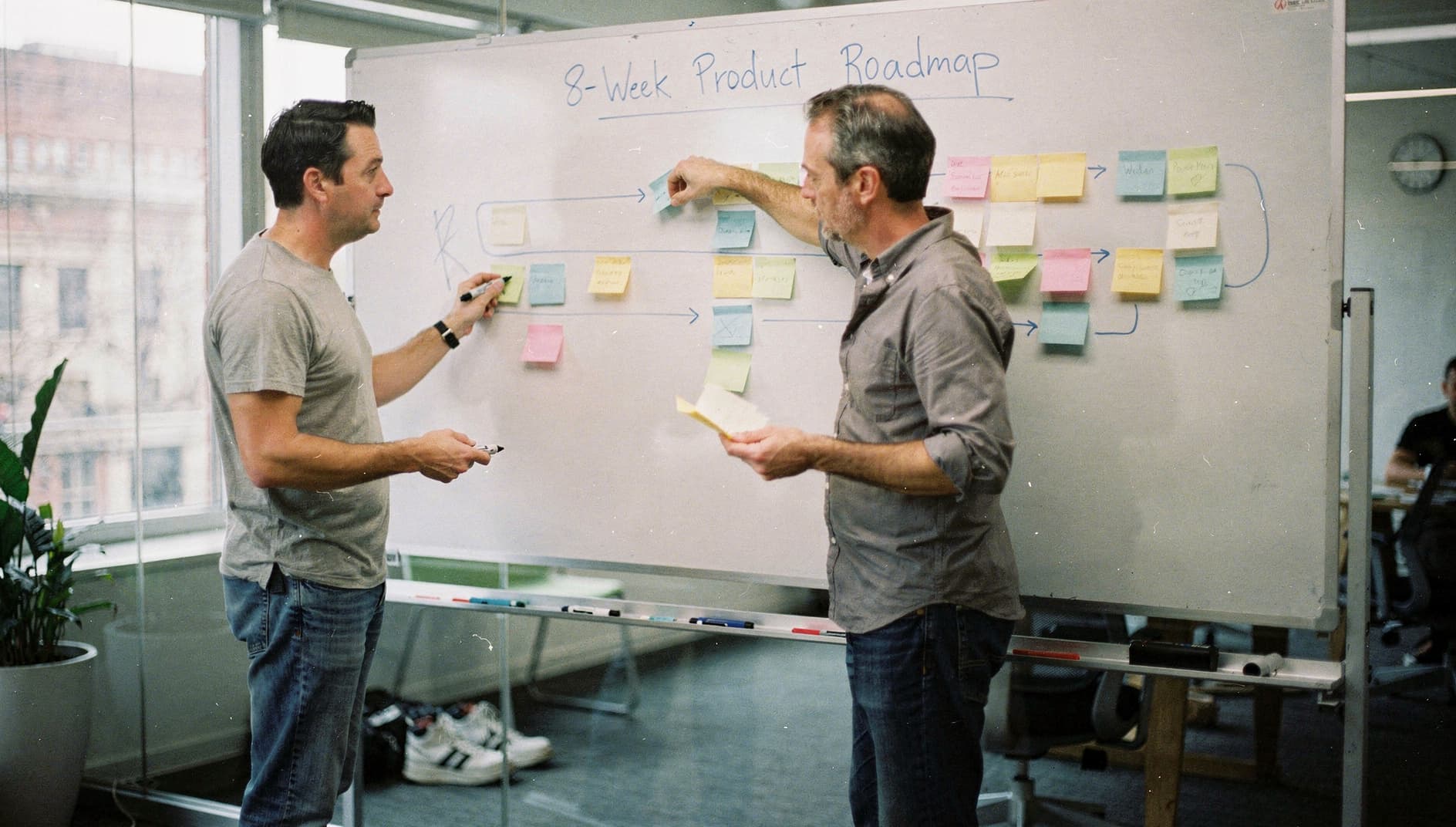
We’ll break down the timeline into four key phases:
- Weeks 1-2: Discovery & Architecture
- Weeks 3-4: Core Feature Development
- Weeks 5-6: Integration & Polish
- Weeks 7-8: Testing & Launch
Budget Expectations: $15K-$50K for a Basic SaaS MVP
From conversations with dozens of startups and agencies, a realistic SaaS MVP budget ranges between $15,000 and $50,000. The variation depends on complexity, team rates, and geographic location.
- Lower end (~$15K): Minimalistic MVP, limited integrations, offshore or solo developers.
- Mid range (~$25K-$35K): Balanced features, experienced developers, some automation and integrations.
- Upper end (~$50K): More complex workflows, robust infrastructure, polished UI/UX.
Keep in mind that the goal is to build just enough to validate your idea and attract early users or investors, not to build the full product upfront.
Tech Stack Recommendations
Choosing the right tech stack affects speed, scalability, and budget. Based on what I’ve seen work best for SaaS MVPs, here are my top picks:
- Frontend: React.js or Vue.js - fast development and large community support.
- Backend: Node.js with Express or Python with Django/Flask - rapid API development.
- Database: PostgreSQL or MongoDB - scalable and flexible.
- Hosting/Infrastructure: AWS (Amplify, EC2, RDS), Heroku, or Vercel for easy deployment and scaling.
- Authentication: Auth0 or Firebase Authentication - secure and quick to implement.
- Payments (if applicable): Stripe - developer-friendly and well-documented.
This stack enables quick iterations, leverages mature ecosystems, and reduces technical debt.
Week 1-2: Discovery & Architecture
Goals
- Define the MVP scope precisely
- Create user stories and prioritize features
- Design system architecture and tech stack
- Prepare project plan and wireframes
Actionable Steps
- Feature Scoping: In my experience, the single biggest MVP killer is feature creep. Use the Moscow Method (Must have, Should have, Could have, Won't have) to ruthlessly prioritize. Ask yourself: "What is the minimal feature set that delivers value and validates the idea?"
- User Stories & Workflow Mapping: Write clear user stories focused on core jobs-to-be-done. For example, "As a user, I want to create an account so I can save my preferences."
- Wireframes & UX Planning: Simple wireframes (even hand-drawn) help align expectations between you and your developers. Tools like Figma or Balsamiq are great for quick mockups.
- Technical Architecture: Identify components (frontend, backend, database, third-party APIs). Define data flow and integration points. Keep architecture simple: a monolithic backend with REST APIs is often enough for MVPs.
- Set Up Project Management: Use tools like Jira, Trello, or ClickUp to track tasks and milestones. Establish daily or bi-weekly checkpoints for progress reviews.
What to Cut
- Fancy UI animations or branding elements beyond basic usability
- Complex admin dashboards
- Multi-language support
- Non-essential third-party integrations
Week 3-4: Core Feature Development
Goals
- Develop essential frontend and backend features
- Implement authentication and user management
- Build core workflows and business logic
Actionable Steps
- Frontend Development: Build interfaces based on wireframes. Focus on functionality over styling. Use component libraries like Material-UI or Tailwind CSS to speed up UI development.
- Backend Development: Set up database schemas, APIs, and business logic. Use RESTful endpoints or GraphQL depending on complexity.
- Authentication: Integrate authentication early. I recommend third-party services like Auth0 or Firebase to avoid reinventing the wheel.
- Data Validation & Security: Implement input validation and basic security measures (e.g., HTTPS, secure password storage).
- Version Control: Use Git with a branching strategy (feature branches, pull requests) to maintain code quality.
What to Cut
- Complex permissions or role management (start with a simple user/admin model)
- Advanced reporting or analytics dashboards
- Multi-device syncing beyond basic functionality
Week 5-6: Integration & Polish
Goals
- Integrate third-party APIs and services
- Improve UI/UX and responsiveness
- Prepare basic analytics and monitoring
Actionable Steps
- Third-Party Integrations: Add payment gateways (Stripe), email services (SendGrid), or communication tools (Twilio) as needed.
- UI/UX Polish: Refine layout, fix bugs, and improve user feedback (loading spinners, form validations). Use user feedback from early testers if possible.
- Analytics Setup: Integrate Google Analytics or Mixpanel to track usage patterns and key metrics.
- Performance Optimization: Optimize images, lazy-load components, and ensure reasonable load times.
- Documentation: Start basic technical and user documentation to ease onboarding and maintenance.
What to Cut
- Excessive UI customization that delays launch
- Over-engineered backend solutions
- Advanced automation or workflows not critical for MVP success
Week 7-8: Testing & Launch
Goals
- Conduct thorough testing (unit, integration, user acceptance)
- Fix critical bugs and prepare deployment
- Launch MVP to early users
Actionable Steps
- Testing: Prioritize automated unit and integration tests for critical paths. Perform manual testing for user flows. In my experience, involving actual users for acceptance testing uncovers usability issues early.
- Bug Fixing & Refinement: Triage bugs by severity. Fix critical issues blocking core functionality.
- Deployment: Deploy to production environment with CI/CD pipelines if possible. Monitor logs and performance metrics post-launch.
- Launch Strategy: Invite early adopters, gather feedback, and prepare to iterate rapidly based on usage.
What to Cut
- Polishing minor UI details that don’t impact usability
- Implementing features for future versions
- Overly complex deployment infrastructure
Final Thoughts: The Power of Saying No
One lesson I’ve learned repeatedly is that successful MVPs are born from disciplined scoping and the courage to say no. It’s tempting to add every feature your users request or that investors suggest, but every addition risks delays and budget overruns.
Focus on delivering your core value proposition and validating your business model. Use real user feedback after launch to guide your roadmap - not assumptions or feature lists.
Summary Checklist
- Weeks 1-2: Prioritize features, create wireframes, define architecture
- Weeks 3-4: Develop core frontend/backend features, implement authentication
- Weeks 5-6: Integrate APIs, polish UI/UX, set up analytics
- Weeks 7-8: Test thoroughly, fix critical bugs, deploy and launch
- Budget: Expect $15K-$50K depending on complexity and team
- Tech Stack: React/Vue, Node.js/Python, PostgreSQL/MongoDB, AWS/Heroku, Auth0/Firebase, Stripe
- Key Advice: Say no to non-essential features, keep architecture simple, gather early feedback
About the Author
I'm Brian Marvin, a fractional CTO with over 30 years of experience helping startups build and launch MVPs fast and smart. I specialize in technical roadmaps, AI-powered advisory, and MVP scoping to save founders time and money. Learn more at empowered.guru.