
Brian Marvin
Published September 15, 2026
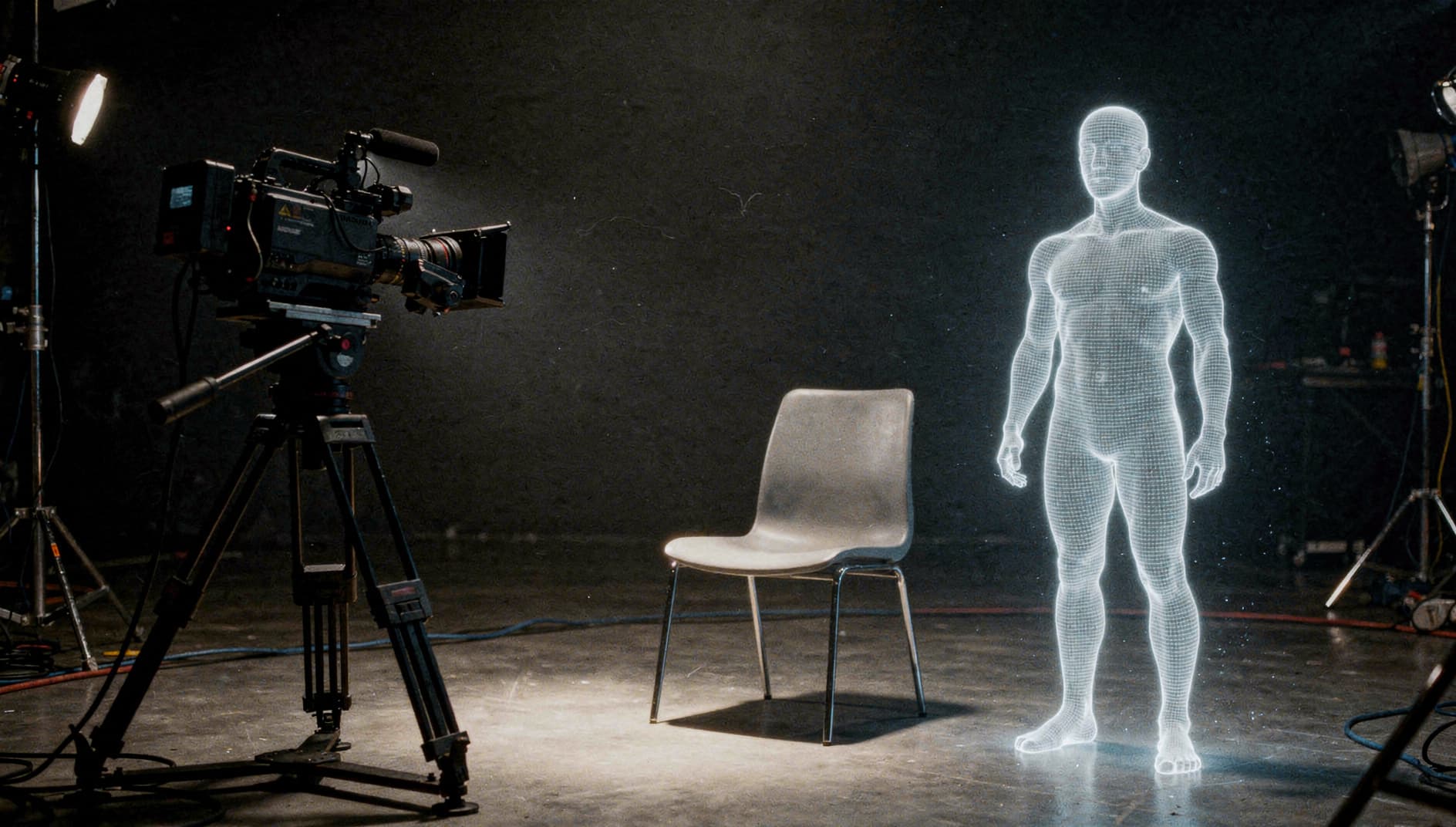
Your Talking Head Now Scales: The 40 Second Clip That Makes 5 Minutes of Video
Upload a short clip of yourself, hand over a script, and get back minutes of presentable video in one pass. It flubs a word here and there. For founder led content, that tradeoff just flipped.
Here is the workflow that changed my content math this month. You record forty seconds of yourself on a phone. You write the script you actually want to say. An AI pipeline built on a frontier model plus a cinematic avatar engine turns it into five minutes of talking head video. First iteration. No corrections. No cleanup. No second pass. A flubbed word or two, and otherwise something you can ship.
I run a practice where I am the product. Founder led video used to mean a camera, lights, three takes, and an editing afternoon. Now the scarce input is the forty second reference and a script worth saying. Everything between that and a finished clip is pipeline. If you have been avoiding video because production eats your week, this post is the new costing model.
What the pipeline actually is
Three layers do three jobs. The frontier model handles language: pacing, emphasis, and turning a rough script into speakable lines. The avatar engine handles performance: lip sync across dozens of languages, face consistency across cuts, natural movement and emotion. The export layer handles delivery: captions, localization, aspect ratios for each platform.
Two product families cover the space differently. HeyGen remains the mature pick for avatar based business communication and localization: text to video, voice cloning, video translation, digital twins with consent flows. Higgsfield carved its niche in cinematic motion and VFX heavy social content, with talking avatar features layered onto a generator built for invented characters. Comparisons consistently land the same way: HeyGen for clone your own face and talking head from a script, Higgsfield for cinematic generation where the character can be synthetic. Pick by the job, not by the demo reel.
The pricing tells you who each serves. HeyGen sits around $29 a month for business avatar work. Higgsfield sits around $19 for generative volume. Both are rounding errors next to a half day shoot.
Why one pass is now good enough
The old avatar output had three tells: dead eyes, plastic skin, and lip sync that drifted by the second sentence. The current generation holds face consistency across a five minute run, locks lips to audio in 70 plus languages, and keeps movement natural enough that the remaining flubs read as human misspeaks rather than machine artifacts.
That matters because founder content is judged on substance per minute, not pixel perfection. A prospect watches sixty seconds to decide if you understand their problem. A slightly flubbed word costs nothing against a clear explanation of their deployment blocker. I would ship a first iteration with two flubs over a polished video that says nothing, every time.
The workflow I give clients
Record one forty second reference clip. Good light from a window, phone at eye level, neutral background, speak naturally for thirty seconds and stay still for ten. This clip becomes your reference. Guard it like a credential, because it is one.
Write the script for speaking, not reading. Short sentences. One idea per paragraph. Say the numbers out loud as you write them. Five minutes of video is roughly 650 words. If your draft reads well silently but trips your tongue, rewrite the sentence. The model will say what you wrote, including the awkward parts.
Generate the first pass and watch it all the way through with a red pen. Mark every flub, every flat line, every cut that feels wrong. Fix the script, not the performance. Regenerate. Most pieces land on the second pass. The ones that need a third usually have a script problem, not a model problem.
Localize only what earns it. The same pipeline that syncs lips in English syncs them in Spanish, Vietnamese, Portuguese, and seventy other languages. If a quarter of your pipeline reads Spanish, ship the Spanish cut. If not, skip it. Localization is now cheap enough to abuse, so gate it on revenue.
Where this fits in a real content operation
Talking head generation covers the middle of the funnel: explainers, product walkthroughs, objection handling, onboarding sequences, training refreshers. One reference clip plus a script bank becomes a month of posts. Pair it with the scheduling and delivery machinery from the agent harnesses I run and a single founder can hold a consistent publishing cadence without a crew.
It does not replace proof. A generated video of you saying the deployment finished is not the deployment finishing. Keep the receipts separate: screenshots, dashboards, customer quotes, live links. The avatar carries the explanation. The evidence carries the claim. Our show-don't-tell breakdown applies doubly when the showing itself is synthetic.
Consent, disclosure, and the lines I hold
A face reference is biometric data. Store the source clip encrypted, limit who can trigger generations, log every render, and never generate another person without their written consent. Platforms with proper digital twin flows require consent by design. Use them.
Disclose synthetic presenters where the audience acts on the content. Training, financial guidance, health claims, and anything a customer pays for get a visible note that the presenter is AI generated. Marketing explainers get it in the description at minimum. The cost of disclosure is zero. The cost of a discovered undisclosed clone is the relationship.
Never clone clients, employees, or public figures without a signed release that names the use, the term, and the revocation path. Never generate a real person's likeness from a text prompt alone. Generic synthetic presenters are fine for ads and demos. Real faces require real permission. This is the same rule I hold for brand imagery everywhere in this practice.
What I would actually do this month
Record the reference clip this week. Write three scripts from questions prospects already asked you: one objection, one explainer, one walkthrough. Generate all three, ship the best one, and measure replies, not views. In my experience the first win lands within two weeks: a prospect answers the video instead of the cold email, because a face explaining their exact problem beats a paragraph describing it.
Build the script bank before you optimize the pipeline. Ten good scripts beat one perfect render setting. Once the bank exists, the cadence holds itself: one shoot of words a week, generations overnight, posts on schedule. The camera crew was never the constraint. The writing was.
About the Author
I'm Brian Marvin, an AI-native Fractional CTO with 30 years in technical leadership. At empowered.guru, I help startups build MVPs, shape roadmaps, and make AI-powered technology decisions that scale.